How Schools Can Identify At-Risk Students Early
Early identification of students facing academic or attendance challenges helps schools provide timely support, improve engagement, and prevent students from falling behind. Discover practical strategies schools can use to support student success.

VidyalayBox Team
Education Technology Team
How Schools Can Identify At-Risk Students Before They Fall Behind
Every student learns at a different pace, but some students need additional support to succeed academically. Frequent absences, declining grades, incomplete assignments, and reduced classroom participation can indicate that a student is experiencing difficulties.
When schools identify these signs early, teachers and administrators can take action before small challenges become serious academic problems. Instead of waiting for examination results or annual reviews, schools can monitor student progress throughout the academic year and provide support when it matters most.
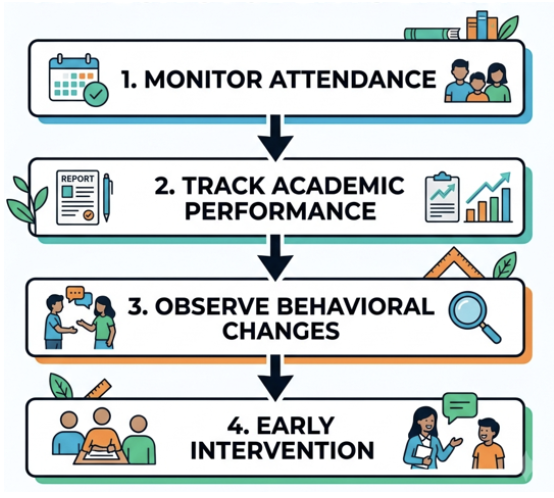
Why Early Identification of Students Matters
Schools need reliable systems to manage growing amounts of student information, financial records, academic data, and parent enquiries. Managing everything manually becomes increasingly difficult as enrolments and administrative responsibilities grow.
School ERP software can address several common problems.
Students may struggle for several reasons, including learning difficulties, family circumstances, financial challenges, health concerns, or a lack of academic support. These challenges are not always immediately visible through examination scores alone.
Early identification helps schools understand which students may need additional attention. It also allows teachers to communicate with parents, arrange extra learning support, and monitor improvements over time.
A proactive approach can help schools improve student engagement, strengthen parent relationships, and create a more supportive learning environment.
1. Monitor Attendance Patterns Regularly
Attendance is one of the most useful indicators of student engagement. Repeated absences, frequent late arrivals, or irregular attendance may affect a student's ability to understand lessons and complete coursework.
Schools should review attendance records regularly rather than waiting until the end of the month or term.
Useful practices include:
-
Tracking daily and subject-wise attendance.
-
Identifying repeated absences and unusual attendance patterns.
-
Notifying parents when students miss school.
-
Reviewing attendance trends over several weeks.
-
Following up to understand the reasons behind recurring absences.
Digital attendance systems can make this process easier by organizing records and helping school staff identify patterns that require attention.
2. Track Academic Performance Beyond Examination Results
Examination marks provide useful information, but they do not always explain why a student is struggling. A student may perform well in one subject while experiencing difficulties in another.
Schools should review multiple indicators, including assignment completion, classroom assessments, homework submissions, and changes in performance over time.
For example, a student whose mathematics scores have declined across several assessments may benefit from additional practice or individual guidance.
Teachers can use these observations to identify learning gaps, adjust teaching methods, and recommend suitable academic support.
3. Encourage Teachers to Share Observations
Teachers interact with students regularly and may notice changes that are not reflected in attendance or marks.
A student who previously participated actively may become withdrawn, stop asking questions, or struggle to complete classroom activities. These changes do not automatically mean that the student is at risk, but they may justify a supportive conversation.
Schools should establish a simple process for teachers to record relevant observations and share concerns with authorized staff.
Regular teacher meetings can help administrators understand student needs and coordinate appropriate interventions without placing unnecessary administrative burdens on educators.
4. Strengthen Communication With Parents
Parents can provide valuable context about changes in a student's behaviour, attendance, or academic performance. However, communication often happens only when a problem becomes serious.
Schools should establish regular communication channels to discuss progress and concerns constructively.
Effective practices include:
-
Sending timely attendance notifications.
-
Sharing academic progress updates.
-
Scheduling parent-teacher meetings when concerns arise.
-
Providing practical suggestions for supporting learning at home.
-
Recording follow-up actions and reviewing progress.
Communication should focus on collaboration rather than blame. When parents and teachers work together, students are more likely to receive consistent support.
5. Create a Structured Student Support Plan
Identifying a concern is only the first step. Schools also need a clear process for deciding what support a student should receive.
Depending on the situation, interventions may include remedial classes, individual mentoring, counselling, additional learning materials, or meetings with parents.
Each support plan should identify the concern, outline suitable actions, assign responsibility, and establish a review date.
Schools should then assess whether the intervention is helping. If attendance improves but academic performance remains low, for example, additional subject-specific support may be necessary.
This process ensures that student support is based on observed needs rather than assumptions.
6. Use School Management Software to Organize Student Data
When attendance registers, examination records, assignment reports, and parent communications are maintained separately, identifying patterns can take considerable time.
School management software can bring important information into a more organized digital environment. Depending on the platform's available features, administrators may be able to review attendance records, compare academic results, monitor assignments, and communicate with parents more efficiently.
VidyalayBox provides digital tools for student information management, attendance tracking, academic records, and parent communication. These capabilities can help schools organize relevant information and support more informed administrative decisions.
However, software should assist professional judgement rather than automatically label students as unsuccessful or predict their future. Schools should consider individual circumstances, protect student information, and ensure that concerns are reviewed by appropriate staff.
7. Measure Whether Support Is Working
Student support should be reviewed regularly to determine whether it is making a difference.
Schools can monitor indicators such as attendance improvement, assignment completion, assessment results, classroom participation, and progress toward individual learning goals.
For example, if a student receives additional mathematics support, teachers can compare subsequent assessment results and classroom performance to determine whether further assistance is needed.
These reviews help schools refine their interventions and allocate resources more effectively.
Conclusion
Identifying students who need additional support requires consistent observation, organized records, and effective communication between teachers, administrators, and parents. By monitoring attendance, reviewing academic progress, responding to teacher observations, and creating structured support plans, schools can address challenges before they become more difficult to manage.
Digital tools like Vidyalaybox Best ERP solution for Schools in Bihar can make these processes more organized by bringing important student information together. With a combination of thoughtful teaching, timely intervention, and responsible use of technology, schools can build a learning environment where every student has a better opportunity to succeed.
VidyalayBox offers a range of school management capabilities that schools can explore to understand whether its platform suits their requirements.
VidyalayBox helps schools organize essential administrative activities through its student information, attendance, academic management, and parent communication capabilities. Visit https://vidyalaybox.com/ to explore how digital school management can support more organized school operations.
Frequently Asked Questions
1. What are the early warning signs that a student may be struggling?
Common indicators include repeated absences, declining assessment results, incomplete assignments, reduced classroom participation, and sudden changes in engagement. These signs should prompt supportive investigation rather than immediate conclusions.
2. How can schools improve student retention?
Schools can improve retention by identifying difficulties early, communicating with parents, providing academic support, addressing attendance barriers, and creating an environment where students feel supported and included.
3. Why is attendance monitoring important for student performance?
Regular attendance helps students participate in lessons, complete coursework, and maintain learning continuity. Monitoring attendance can help schools identify patterns that may require follow-up or additional support.
4. How can school management software help teachers identify learning gaps?
Depending on its features, school management software can organize attendance, assessment results, assignments, and student records. Teachers can use this information to recognize changes in performance and decide where additional support may be beneficial.
5. Can VidyalayBox help schools manage student progress?
VidyalayBox offers student information management, attendance tracking, academic management, and parent communication tools. These features can help schools organize student-related information and coordinate administrative activities more efficiently.
Related Articles & Guides
Smart School Management Software for Patna Schools
Simplify admissions, attendance, fee collection and parent communication with smart school management software designed for modern schools.
How School Admission Software Simplifies Enrolment
Discover how school admission management software helps schools simplify applications, organize student records, reduce paperwork and improve enrolment.
School Timetable Management Software for Better Planning
Discover how digital timetable management helps schools organize classes, allocate teachers, avoid scheduling conflicts, and improve academic planning.